
Blown-In Insulation in Anaheim, CA
Energy-Saving Blown-In Insulation in Anaheim, CA for Anaheim, CA Homes — Licensed & Insured
Need blown-in insulation in Anaheim, CA? Climate Guard offers expert installation, free estimates & competitive pricing. Call 858-927-1082 today!
Blown-in insulation is one of the most effective and efficient methods for insulating attics, walls, and hard-to-reach spaces in Anaheim homes and businesses. Using specialized equipment, loose-fill insulating material — typically cellulose or fiberglass — is pneumatically blown into cavities, creating a seamless thermal and acoustic barrier that conforms to every corner and crevice.
Anaheim’s unique climate — marked by hot, dry summers that routinely push temperatures past 95°F, cool marine-influenced evenings, and the occasional Santa Ana wind event — creates intense demands on residential insulation systems. Homes throughout Anaheim’s diverse neighborhoods, from the post-war ranch houses near Disneyland Resort to the newer tract developments in the Platinum Triangle, all benefit significantly from properly installed blown-in insulation.
Read moreShow less
At Climate Guard Attic Insulation, our team of professional insulation contractors brings specialized knowledge of Southern California’s building stock and climate conditions to every project. Call us today at 858-927-1082 to schedule a free assessment.
Understanding Blown-In Insulation
Blown-in insulation — also referred to as loose-fill insulation — has been used in residential and commercial construction in the United States since the early twentieth century. Originally developed as a way to insulate existing structures without requiring major demolition, the technology evolved significantly through the 1970s energy crisis, when federal and state agencies began incentivizing homeowners to upgrade their thermal envelopes. In California specifically, Title 24 energy compliance standards, first adopted in 1978 and revised numerous times since, have steadily raised the minimum R-value requirements for residential construction, making blown-in insulation a preferred retrofit solution across the state.
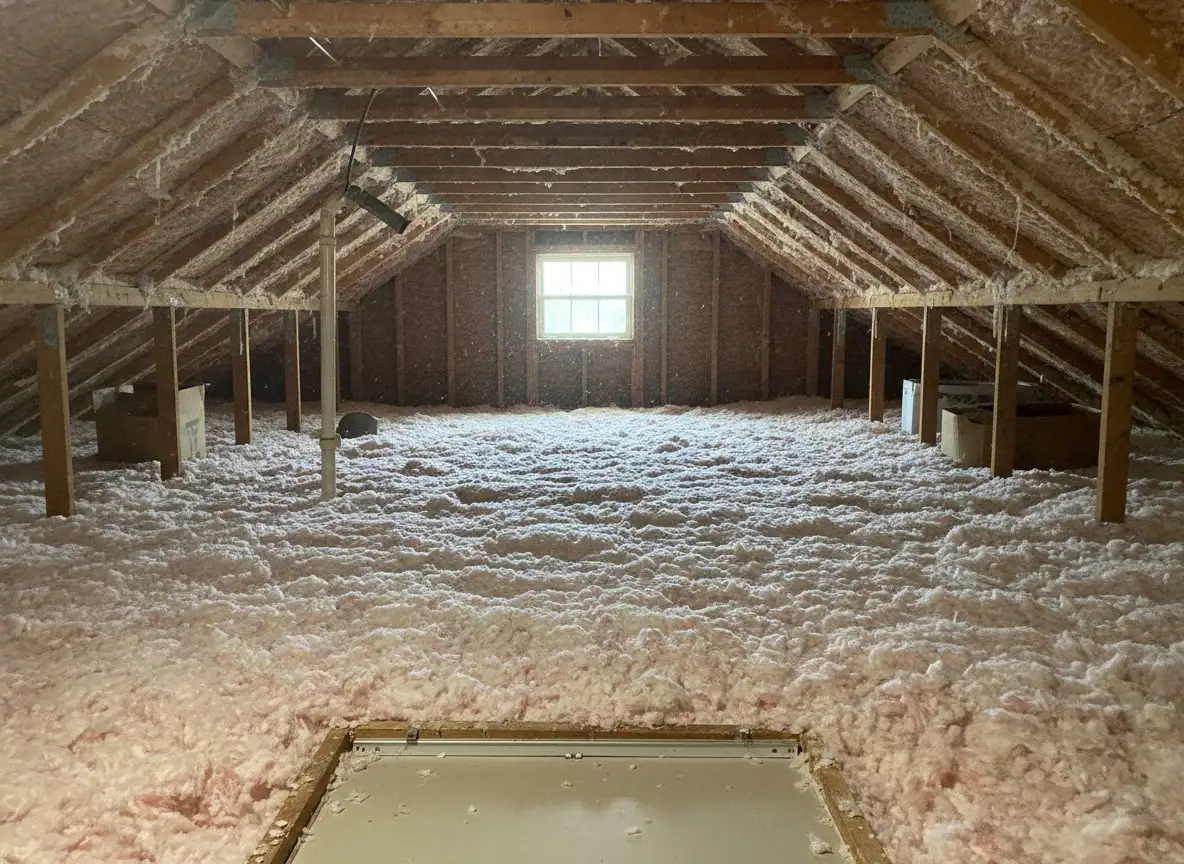
The process works by feeding loose insulating material — most commonly cellulose (made from recycled paper treated with fire retardants), fiberglass, or mineral wool — into a blowing machine connected to a long flexible hose. An installer guides the hose into the target cavity, whether that is an open attic floor, a closed wall cavity through drilled ports, or a crawl space, and the machine propels the material at high velocity until the space is filled to the specified depth and density.
The resulting insulation layer creates millions of tiny air pockets that resist conductive and convective heat transfer. For attics in Anaheim, the California Energy Commission recommends a minimum R-38 for climate zones similar to Orange County, though many energy-efficiency experts recommend R-49 or higher for maximum performance. Blown-in insulation makes achieving these higher R-values straightforward: installers simply add more material until the target depth is reached — typically 10 to 15 inches for R-38 to R-49 with cellulose or fiberglass.
Anaheim’s housing stock is notably diverse. The city contains thousands of homes built between the 1950s and 1970s — particularly in the neighborhoods surrounding Anaheim Stadium and the older districts west of Harbor Boulevard — that were constructed before modern insulation codes existed. These homes frequently have little to no insulation in their attic floors, making blown-in insulation not just a comfort upgrade but a significant energy-efficiency necessity. Newer developments in areas like Anaheim Hills may have adequate insulation that has settled or degraded over time and requires top-off or full replacement.
Why Blown-In Insulation Is Needed in Anaheim, CA
Extreme Summer Heat
Anaheim’s summers are long and intense. The city’s average high temperature in July and August hovers around 94°F to 96°F, and heat waves regularly drive temperatures above 100°F. During the September 2022 heat dome event — one of the most severe in Southern California’s recorded history — parts of Anaheim registered temperatures of 108°F. Attic spaces in uninsulated or under-insulated homes can reach temperatures of 150°F to 160°F during such events, turning the ceiling into a radiant heat source that overwhelms air conditioning systems and drives up energy bills dramatically.
Santa Ana Wind Events
Anaheim experiences powerful Santa Ana wind events, typically between October and February, when dry, hot winds descend from the inland deserts and pass through mountain passes like the Cajon and Santa Ana Canyons. These winds, which can exceed 50 mph and push relative humidity below 10%, accelerate moisture loss from building materials and create rapid temperature fluctuations. The thermal cycling caused by Santa Ana events stresses existing insulation, causes it to shift and settle, and reduces its effective R-value over time. Neighborhoods in the eastern portions of Anaheim — particularly Anaheim Hills near the Weir Canyon and Coal Canyon areas — are especially exposed to these conditions.
Marine Layer Influence and Nighttime Cooling
Despite scorching daytime temperatures, Anaheim benefits from a persistent marine layer that rolls in from the Pacific each evening and morning, particularly during June Gloom season (May through July). This creates a daily temperature swing of 25°F to 35°F in many neighborhoods. Poor insulation allows this thermal energy to transfer in and out of homes rapidly, causing HVAC systems to cycle more frequently and increasing wear and energy costs. Blown-in insulation’s dense, seamless coverage helps buffer these daily swings more effectively than batt insulation, which leaves gaps at framing members and around obstructions.
Aging Housing Stock in Core Anaheim Neighborhoods
Neighborhoods such as the Anaheim Resort District, West Anaheim, Colony Historic District, and the areas surrounding Lincoln Avenue and Ball Road contain substantial concentrations of homes built in the 1950s, 1960s, and early 1970s. Many of these homes were built with minimal or no attic insulation — standards of the era required only R-11 in some cases — and whatever insulation was installed has experienced decades of settling, moisture infiltration, and pest activity. A home in West Anaheim built in 1962 may have less than 2 inches of degraded insulation on its attic floor, representing an R-value of R-6 or lower — far below the current California code minimum of R-38.
Wildfire Smoke and Air Quality
Orange County’s proximity to the Santa Ana Mountains means Anaheim periodically experiences poor air quality during wildfire season. Well-sealed attic insulation systems help reduce the infiltration of smoke particulates into living spaces, adding an indoor air quality benefit alongside thermal performance.
Free, no-obligation estimates
Talk to Climate Guard Attic Insulation
Tell us what you need and we’ll take it from there.
Signs You Need Blown-In Insulation in Anaheim
Energy and Comfort Indicators
- Monthly electric bills exceeding $200–$300 during Anaheim summer months (June–September), even with a modern HVAC system
- Rooms on the top floor or directly beneath the attic that are consistently 5°F or more warmer than the rest of the house
- Air conditioning running nearly continuously during afternoon hours without reaching the set temperature
- Noticeable drafts near ceiling fixtures, recessed lights, or attic access hatches
Physical Inspection Indicators
- Attic insulation depth measuring less than 10 inches (indicating R-38 or below)
- Visible attic floor joists — if you can see the tops of the joists, insulation has settled well below code
- Insulation that is matted, discolored, damp, or compressed
- Evidence of rodent nesting, tunneling, or contamination within existing insulation
Urgency Indicators
- Your home was built before 1980 and has never had an insulation upgrade
- You are preparing for an Orange County home sale and need to meet disclosure or buyer inspection requirements
- You have recently completed an attic cleaning or rodent remediation and need fresh insulation installed
If you observe two or more of these signs, contact Climate Guard Attic Insulation at 858-927-1082 for a professional evaluation. Learn more about our attic insulation services
Blown-In Insulation Methods and Approaches
Cellulose Blown-In Insulation
Cellulose is made from 75–85% recycled paper fiber treated with borate-based fire retardants. It is the most commonly recommended blown-in material for Anaheim attics due to its high density (settled density of approximately 1.5–2.0 lbs per cubic foot), which makes it resistant to the air movement created by Santa Ana wind events. Cellulose achieves approximately R-3.5 per inch and is an excellent choice for open attic floor applications in homes throughout West Anaheim, the Colony District, and Anaheim Hills.
Fiberglass Blown-In Insulation
Blown-in fiberglass uses glass fiber material and achieves approximately R-2.2 to R-2.7 per inch at installed densities. It is moisture-resistant and does not settle as significantly as cellulose in low-humidity environments. Fiberglass blown-in is often preferred for homes near Anaheim’s older commercial corridors where HVAC ductwork in the attic creates elevated temperatures that could affect cellulose performance. Learn more about fiberglass insulation options
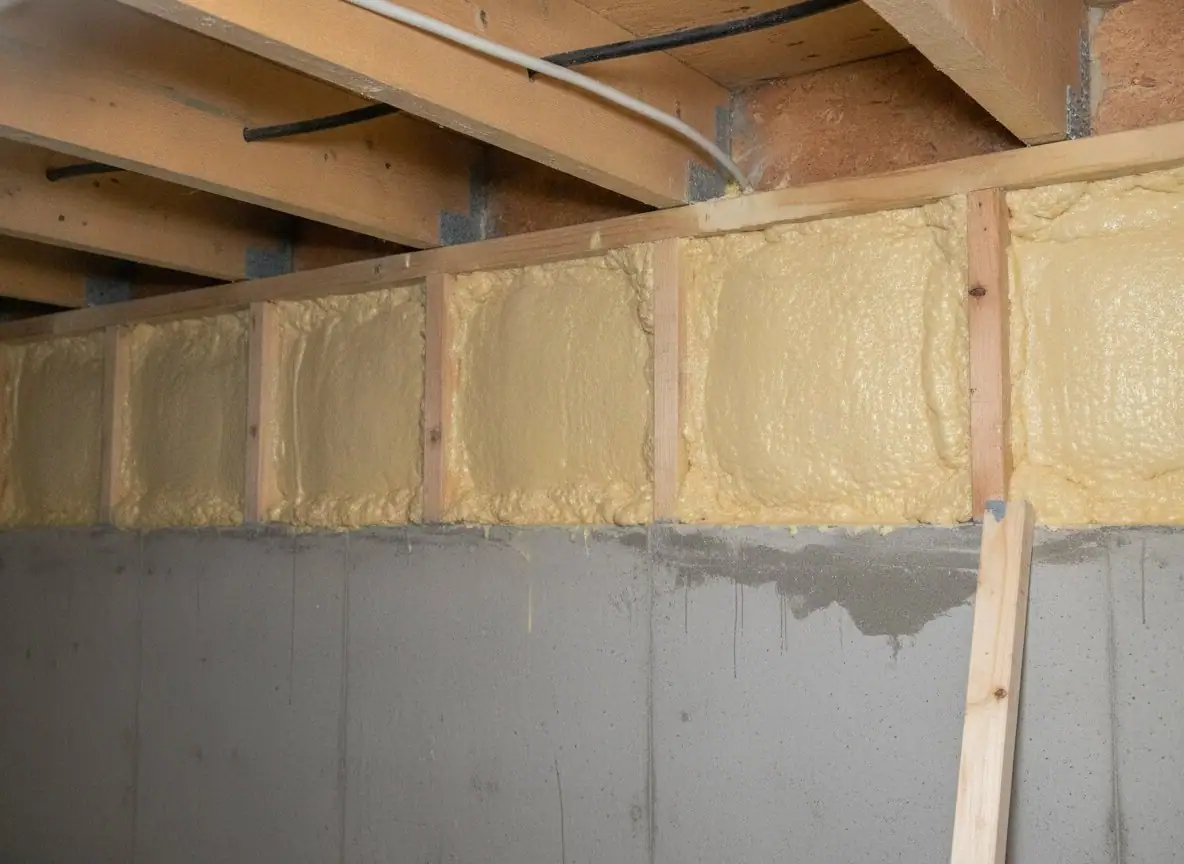
Dense-Pack Blown-In for Wall Cavities
For closed wall cavities in Anaheim homes that were never insulated or where original insulation has deteriorated, dense-pack blown-in insulation is injected through small drilled holes at high pressure. The material packs to a density of 3.5–4.0 lbs per cubic foot, completely filling the cavity and eliminating convective loops within the wall. This method is particularly effective in the stucco-clad wood-frame homes common to central Anaheim neighborhoods.
Net-and-Blow for New Construction or Open Rafter Bays
For cathedral ceilings or open rafter bays in newer Anaheim construction projects, a fabric netting is stapled across the rafter bays and insulation is blown behind it, creating a smooth, contained insulation layer that maintains uniform depth and density throughout.
Blown-In Insulation Cost in Anaheim, CA
Understanding the cost of blown-in insulation in Anaheim helps homeowners plan their projects effectively. Pricing varies based on several key factors specific to the local market.
Typical Cost Ranges
- Attic blown-in insulation (open floor, 1,000–1,500 sq ft attic): $1,200–$2,800 for cellulose to R-38/R-49
- Attic blown-in with air sealing included: $1,800–$3,500
- Dense-pack wall insulation (per 100 sq ft of wall area): $300–$600
- Top-off / insulation upgrade (adding to existing insulation): $800–$1,800 depending on attic size and target R-value
- Combined insulation removal and re-install: $2,500–$5,000+ depending on attic size and contamination level
Factors That Affect Cost in Anaheim
- Attic accessibility: Low-pitch rooflines common in 1950s Anaheim ranch homes can add 15–20% to labor costs due to restricted workspace
- Existing insulation condition: Pest-contaminated insulation requiring removal before installation increases total project cost
- Material choice: Cellulose is generally 10–15% less expensive than fiberglass per installed R-value
- Target R-value: Upgrading to R-49 versus R-38 adds approximately $200–$400 to a typical Anaheim attic project
- Utility rebates: Southern California Edison and SoCalGas offer rebate programs for qualifying insulation upgrades; our team can help you identify applicable incentives
Call 858-927-1082 for a no-obligation estimate specific to your Anaheim home. Schedule your free insulation assessment today
Neighborhoods We Serve in Anaheim
West Anaheim
West Anaheim contains a high concentration of homes built between 1950 and 1970, many of which have never received insulation upgrades. These single- story ranch-style homes with low-pitch roofs typically have 2–4 inches of degraded fiberglass batt insulation — or none at all — on their attic floors. Blown-in cellulose to R-49 is the standard recommendation for this area.
Anaheim Hills
The hillside communities of Anaheim Hills feature more varied construction from the 1970s through the 2000s, with a significant number of two-story homes and complex rooflines. This area’s elevated exposure to Santa Ana winds makes dense-pack and high-density cellulose particularly effective. Crawl space insulation is also commonly needed here due to elevated foundations.
Colony Historic District
The Colony District near downtown Anaheim contains some of the city’s oldest residential stock, including Craftsman bungalows and Victorian-era homes dating to the early 1900s. These homes require special care during installation to preserve historic structural elements while achieving modern R-values.
Platinum Triangle / Stadium District
The evolving Platinum Triangle near Angel Stadium includes newer condominiums and townhomes alongside older commercial conversions. Blown-in insulation in these denser residential formats often focuses on party wall and ceiling applications for acoustic performance as much as thermal efficiency.
Blown-In Insulation Maintenance Tips for Anaheim Homeowners
- Inspect attic insulation depth annually: Use a ruler or depth probe through the attic access hatch each fall before Anaheim’s heating season begins. Blown-in insulation settles 10–15% in the first year; if depth has dropped below target, a top-off may be warranted.
- Check soffit vents after Santa Ana wind events: High winds can push debris into soffit openings that obstruct ventilation channels; blocked vents trap heat and moisture against the insulation.
- Monitor for pest entry points: Roof rats and squirrels are active in Anaheim Hills and central Anaheim; inspect fascia boards and roof penetrations seasonally. Our rodent proofing service can seal entry points before damage occurs.
- Keep attic access hatches fully weatherstripped: The hatch frame is one of the largest thermal bypass points in most Anaheim homes.
- Avoid storing heavy items on attic insulation: Compressing blown-in insulation reduces its R-value; use raised walkboards if attic storage is necessary.
- Address roof leaks immediately: Even minor leaks saturate blown-in cellulose rapidly, collapsing air pockets and permanently reducing R-value.
- Re-evaluate insulation after any attic cleaning: Post-cleaning is the ideal time to upgrade insulation levels. Schedule attic cleaning and insulation together to reduce costs.
Why Choose Climate Guard Attic Insulation in Anaheim
Climate Guard Attic Insulation is a professional insulation contractor dedicated to serving Anaheim and the surrounding Orange County communities. Our team understands the specific demands that Anaheim’s Climate Zone 8 designation, aging housing stock, and Santa Ana wind events place on insulation systems — and we bring that knowledge to every project.
We offer a comprehensive range of services beyond blown-in insulation, including spray foam insulation, fiberglass insulation, insulation removal, attic cleaning, and rodent proofing — making us a single-source solution for all attic-related needs.
Our process prioritizes transparency: we document existing conditions with photographs, provide written estimates before work begins, and deliver post-installation documentation that confirms installed R-values. We can help Anaheim homeowners identify applicable Southern California Edison and SoCalGas rebates, reducing out-of-pocket costs.
Call 858-927-1082 to speak with a member of our Anaheim insulation team today.
FAQ
Frequently Asked Questions About Blown-In Insulation in Anaheim, CA
How much does blown-in insulation cost in Anaheim?
For a typical Anaheim home with an attic floor of 1,000 to 1,500 square feet, blown-in cellulose insulation installed to R-38 or R-49 typically costs between $1,200 and $3,500, depending on existing insulation conditions, accessibility, and whether air sealing is included. Dense-pack wall applications are priced separately. Call 858-927-1082 for a property-specific estimate.
What R-value do I need in Anaheim, CA?
The California Energy Commission’s Title 24 standards require a minimum of R-38 in attic floors for most Anaheim homes in Climate Zone 8. However, many energy efficiency professionals and utility rebate programs recommend R-49 for maximum performance in Anaheim’s hot summers. Our assessment will determine the optimal R-value for your specific home.
How long does blown-in insulation installation take?
A standard attic blown-in insulation installation in an Anaheim home typically takes 4 to 8 hours from equipment setup to final cleanup, including air sealing. Larger attics, significant air sealing work, or prior insulation removal can extend the timeline to a full day. Most projects are completed in a single visit.
Is blown-in insulation better than batt insulation for Anaheim homes?
For most Anaheim attic applications, blown-in insulation outperforms batt insulation because it fills irregularly shaped spaces, covers framing members completely, and is not affected by the gaps that typically appear around obstructions in batt installations. The seamless coverage is especially important given Anaheim’s strong temperature differentials and Santa Ana wind events.
Will blown-in insulation cause moisture problems in my Anaheim attic?
Anaheim’s dry Climate Zone 8 environment is one of the least problematic in California for moisture accumulation in insulation. Properly installed blown-in cellulose or fiberglass, combined with maintained soffit and ridge ventilation, will not cause moisture issues under normal conditions. We inspect for existing moisture problems before installation and address any ventilation deficiencies as part of our process.
Does blown-in insulation help with Anaheim’s wildfire smoke?
A well-insulated and properly air-sealed attic reduces the infiltration pathways through which smoke particulates can enter living spaces during wildfire events — a periodic concern in Anaheim given the city’s proximity to the Santa Ana Mountains. While insulation is not a substitute for dedicated air filtration, it is a meaningful contributor to improved indoor air quality during smoke events.
Are there utility rebates available for blown-in insulation in Anaheim?
Yes. Anaheim residents served by Southern California Edison and SoCalGas may qualify for rebates on qualifying insulation upgrades, particularly when insulation levels are brought up to or beyond Title 24 minimums. The Anaheim Public Utilities department also periodically offers energy efficiency incentive programs for Anaheim residents on city power. Our team can help you identify and apply for applicable rebates during your assessment.
How often does blown-in insulation need to be replaced?
High-quality blown-in cellulose or fiberglass insulation installed in an Anaheim attic with no moisture intrusion, pest activity, or physical disturbance can maintain effective performance for 20 to 30 years or more. Annual depth checks allow you to monitor settling and schedule a low-cost top-off before performance degrades significantly, rather than waiting for a full replacement.
Get a Free Blown-In Insulation Estimate in Anaheim Today
If your Anaheim home is uncomfortable during summer heat waves, your energy bills are climbing, or your attic insulation is decades old, Climate Guard Attic Insulation is ready to help. Our professional team provides thorough assessments, transparent pricing, and high-quality blown-in insulation installations tailored to the unique demands of Anaheim’s climate and housing stock.
We serve all Anaheim neighborhoods — from West Anaheim and the Colony District to Anaheim Hills and the Platinum Triangle — with the same commitment to quality and customer satisfaction.
Call us today at 858-927-1082 to schedule your free in-home insulation assessment, or submit a request online and a member of our Anaheim team will contact you promptly. Don’t let another Anaheim summer drain your energy budget — act now.
Get in touch
Find insulation help near you
Request a free estimate online or give us a call — our team will follow up quickly.
- Call us(858) 927-1082
- Visit1127 N Fountain Way, Anaheim, CA 92806
- HoursMon - Sun 07:00-19:00